Beyond the Baler: Maximizing Value for BOPP and PET Setup Rolls
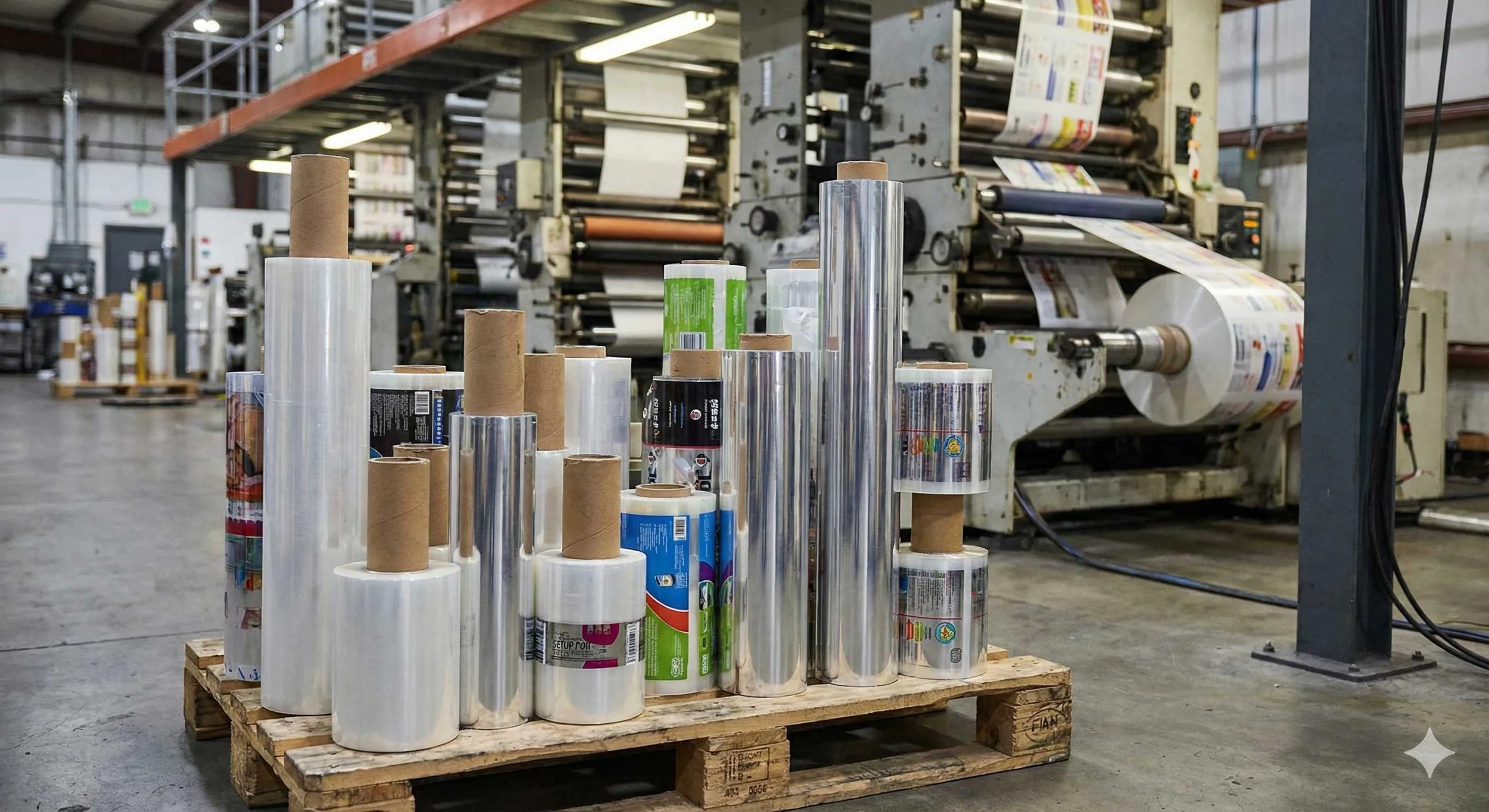
For flexible packaging converters, waste is an unavoidable part of the process. Every time a flexographic or rotogravure press is set up for a new run, hundreds of pounds of "setup rolls" are generated to align the registration and color.
The traditional disposal method is labor-intensive: operators take razor knives, slash the film off the cardboard cores, and stuff the loose material into a baler or compactor.
This is inefficient, dangerous (knife hazards), and wasteful.
At Waste Optima, we advocate for a "Keep it on the Roll" strategy. We work with specialized industrial recyclers equipped with heavy-duty guillotines and core splitters. This allows your team to simply stack the setup rolls on a pallet and ship them "as-is," saving countless hours of labor while maximizing the scrap value of your high-grade BOPP and PET.
The Value of BOPP (Biaxially Oriented Polypropylene)
BOPP is the workhorse of the snack food industry. Because it is a "bi-oriented" film, it is incredibly strong and resistant to stretching—which makes it a nightmare to process in standard plastic shredders.
However, as a scrap commodity, BOPP is valuable.
Clear BOPP: Commands a premium price as a near-virgin feedstock.
Printed BOPP: Highly recyclable into dark-colored industrial repro.
Metallized BOPP: Often mistakenly landfilled, metallized film can be recycled. While the aluminum layer is a contaminant, specialized wash lines can remove it or process the material into lower-grade applications.
The PET (Polyester) Challenge
[Body Text] PET film (often used for lidding or high-gloss labels) has a much higher melting point than Polypropylene.
The Risk: If you mix PET rolls with your BOPP bales, you contaminate the load. The PET won't melt at the same temperature, ruining the recycled pellet.
The Solution: Segregation is key. By keeping PET setup rolls on their own pallets, we can direct them to polyester-specific reclaimers who turn them into fiber (carpet/textiles) or strapping.
Scrap Value Hierarchy
| Grade | Description | Recyclability |
|---|---|---|
| Natural (Clear) | No Print, No Metal | 🌟 Highest Value |
| Printed (BOPP/PET) | Ink Coverage (Any %) | ✅ High (Industrial Use) |
| Metallized | Silver / Mirror Finish | ⚠️ Specialized (Requires Volume) |
| Mixed / Laminated | BOPP & PET Mixed | ❌ Low / Difficult |
Metallized Film: Trash or Cash?
One of the most common questions we get from printers is: "Can you take the silver stuff?" Metallized film (vapor-deposited aluminum on plastic) looks like foil, but it is 99% plastic.
Old Way: Landfill it because it sparks in standard extruders.
New Way: We route metallized rolls to specialized facilities that either use chemical washing to strip the metal or use filtration extruders that can handle the microscopic metal content. Don't trash it—recycle it.
Improving Safety & Efficiency
Recycling on the roll isn't just about the scrap rebate; it's about EHS (Environmental Health and Safety).
Eliminate Lacerations: Removing razor knives from the waste handling process reduces injury risk.
Reduce Dust: Grinding or baling printed film creates ink dust. Palletizing rolls is a clean process.
Speed: Forklifting a pallet of rolls onto a truck is faster than making, tying, and stacking bales.
Frequently Asked Questions
Do we need to separate the cores?
No. That is the primary benefit of our program. Our downstream processors use hydraulic core splitters to separate the fiber from the plastic efficiently.
Can you take "butt rolls" (small remainders)?
Yes. Butt rolls (the last few hundred feet on a roll) are perfectly acceptable. We combine these with larger setup rolls to build full truckloads.
How heavily printed can the film be?
We accept 100% print coverage. While heavy ink loads (especially white titanium dioxide ink) slightly lower the material's yield, it is still fully recyclable.
Streamline Your Scrap Floor
Stop paying your skilled operators to cut trash. Contact Waste Optima to set up a Roll Recycling program. We will maximize the value of your BOPP and PET scrap while improving your plant's efficiency.