The 3 Enemies of Film Recycling: Why Mills Reject Industrial Bales
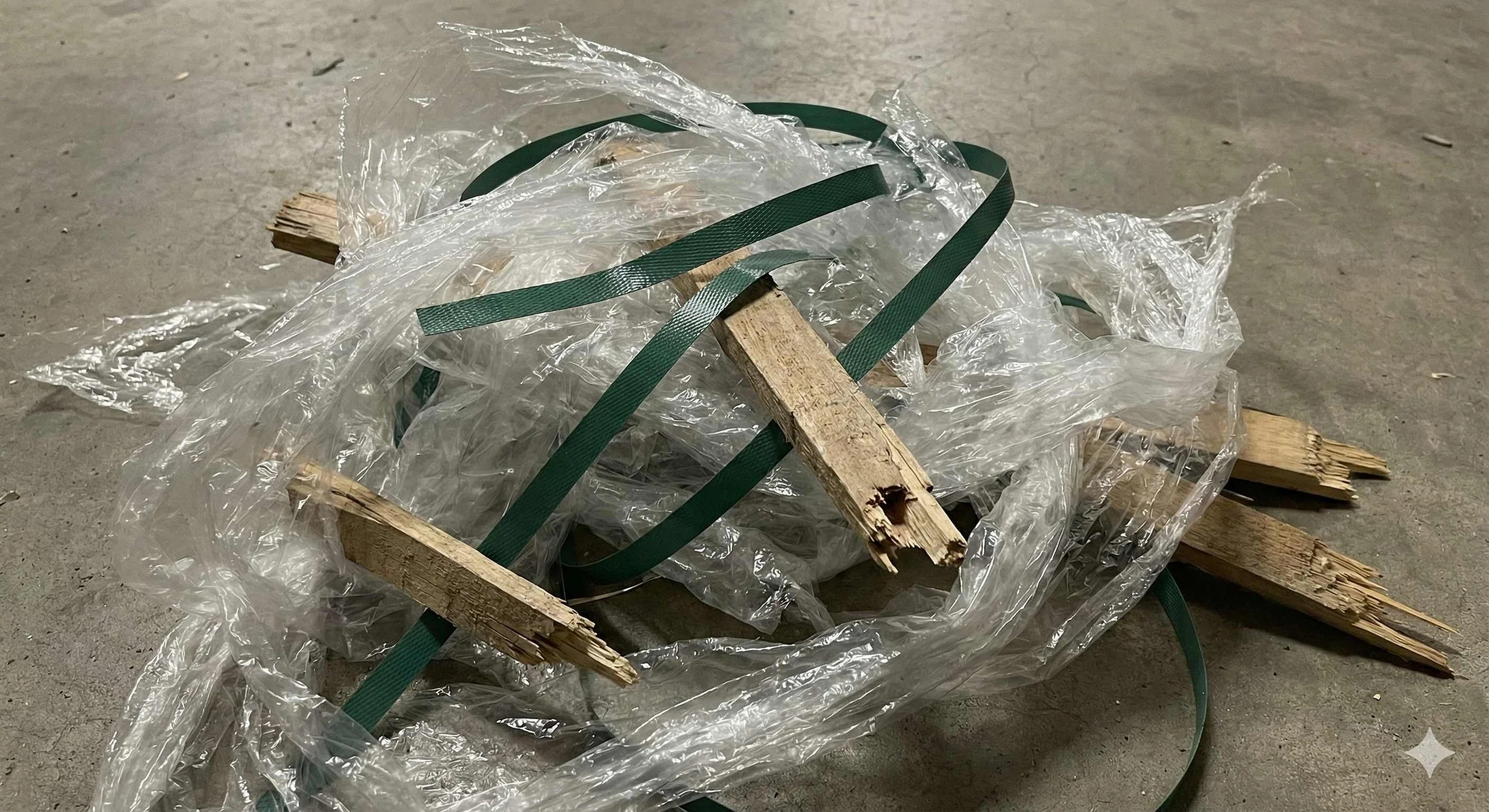
The most expensive load of recycling is the one that gets rejected.
Imagine this scenario: Your team works hard to bale 40,000 lbs of plastic film. You ship it to a processor. Upon arrival, they cut open the first bale and find it full of rigid banding and wood chips. The entire load is rejected. You are now on the hook for the return freight and the landfill disposal fees.
This is the "Contamination Nightmare."
For industrial facilities, the baler often becomes a convenient place to hide general dock waste. But plastic recycling is a chemistry process. If contaminants enter the melt stream, they ruin the end product. To protect your revenue, your team must vigilantly banish the "Three Enemies" of film recycling.
Enemy #1: PET Strapping (The "Melt Killer")
This is the single most common contaminant in warehouse recycling.
The Mistake: Dock workers cut the plastic shrink wrap and the plastic strapping (banding) off a pallet and throw both into the baler.
Why it Fails: Shrink wrap is LDPE (Low-Density Polyethylene). Strapping is usually PET (Polyester) or PP (Polypropylene).
The Chemistry: LDPE melts at ~225°F. PET melts at ~500°F. If you put strapping into a film recycler, the strapping stays solid while the film melts. These solid chunks clog the extrusion screens, forcing the mill to shut down production. Zero tolerance.
Enemy #2: Wood & Floor Sweepings
A vertical baler looks a lot like a trash compactor. Unfortunately, this leads to the "Floor Sweep" problem.
The Mistake: Sweeping wood splinters (from broken pallets), dust, and cigarette butts into the baler to "clean up" the dock.
Why it Fails: Wood is organic; plastic is synthetic. When wood chips hit the melt screen, they burn and carbonize, creating black specs and weak points in the recycled plastic pellet.
The Fix: Keep a dedicated trash bin next to the baler. If it's easier to throw trash in the bin than the baler, compliance goes up.
Enemy #3: Moisture & "The Wet Bale"
Space is tight, so bales are often stored outside behind the loading dock.
The Mistake: Leaving bales exposed to rain and snow.
Why it Fails: Water gets trapped inside the dense layers of plastic. Since the material isn't breathable, mold grows rapidly. Furthermore, recyclers buy plastic by the pound—they refuse to pay plastic prices for water weight.
The Fix: Store bales under a covered awning or inside a trailer immediately. If bales must be outside, cover them with a tarp or a bale bag.
Contaminant Impact Matrix
| Contaminant | Visual ID | Result at Mill |
|---|---|---|
| PET Strapping (Banding) | Rigid Green/Black Strips | REJECTION (Clogs Screens) |
| Wood / Trash | Splinters, Dust, Debris | REJECTION (Carbonization) |
| Moisture | Wet / Moldy Interior | DOWNGRADE (Weight Penalty) |
| PVC (Vinyl) | Thick / Chemical Smell | REJECTION (Toxic Gas) |
A Note on Paper Labels
You will notice we didn't list "Paper Labels" as a primary enemy.
Grade A: Requires minimal labels (<2%).
Grade B: Can handle some labels. Modern wash lines can remove paper labels via float-sink tanks. While excessive paper downgrades the value (from Grade A to B), it rarely causes a rejection. Strapping and Wood, however, will get a load rejected immediately.
Frequently Asked Questions
How do I train my staff to identify strapping?
The "Crinkle Test" is effective. Soft shrink wrap makes a soft sound. Strapping creates a "snap" or rigid noise. Also, color coding helps: Green strapping is almost always PET/PP and must be trashed.
Can we bale black plastic?
Black shrink wrap (often used for security) is technically recyclable (LDPE), but it turns the entire batch of recycled pellets black or grey. It cannot be mixed into a "Grade A Clear" bale. It must be separated into a Grade B or "Mixed Color" bale.
What about PVC (Vinyl)?
PVC is arguably the most dangerous contaminant (releasing chlorine gas), but it is less common in general distribution centers. However, if you handle vinyl pallet covers, they must be kept out of the LDPE stream.
Protect Your Recycling Revenue
Quality control starts at the loading dock. Contact Waste Optima for a contaminant audit. We can review your current bale quality and provide training resources to help your team hit "Grade A" consistently.