The Expiration Cliff: Why 6 Months is the Break-Even Point for Bulk Ingredient Recovery
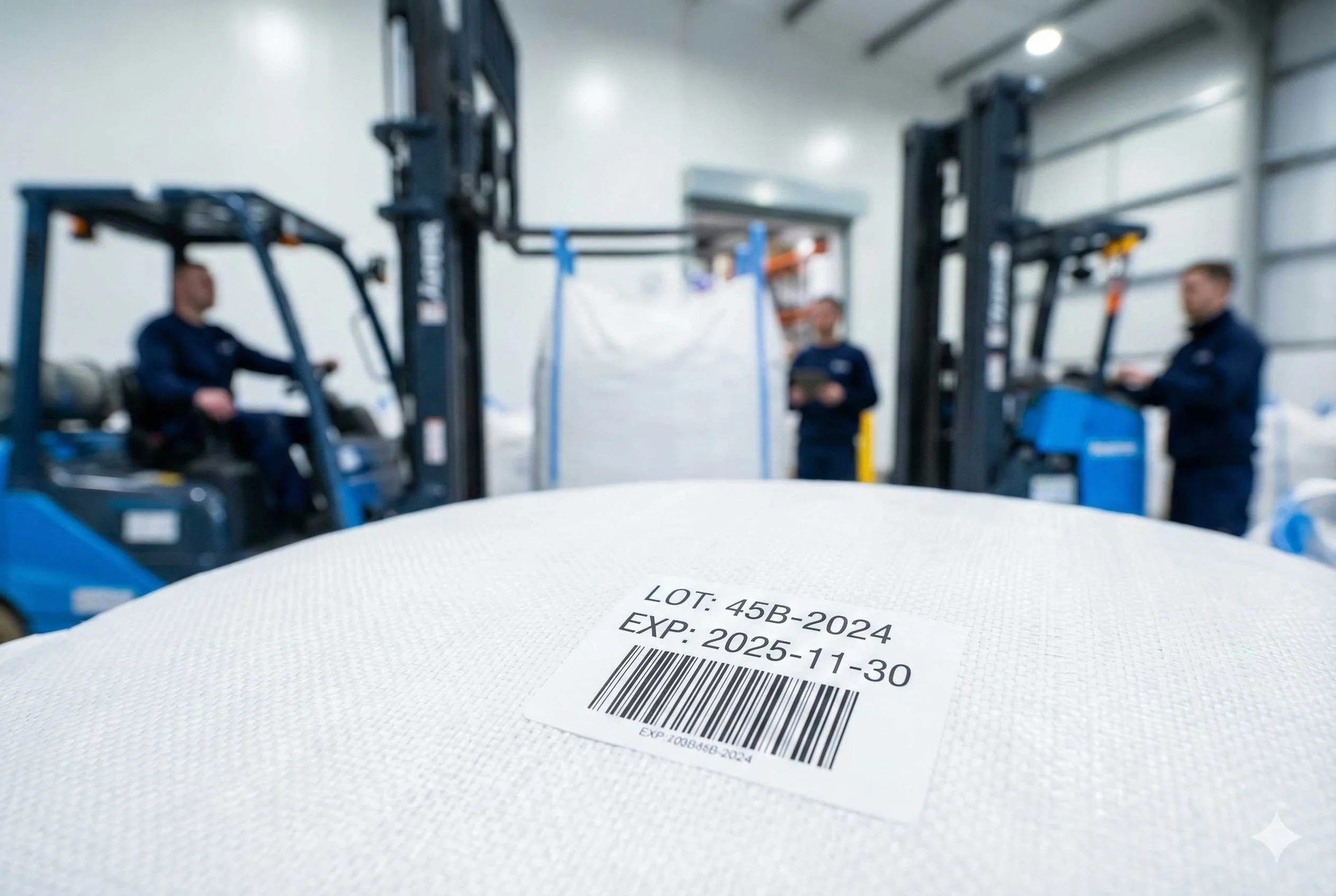
For food manufacturers and inventory managers, excess inventory is often viewed as a dormant asset—something that can sit on the balance sheet until a decision is made. However, when dealing with bulk ingredients, inventory is not dormant; it is decaying.
Every day an ingredient sits in a warehouse, it moves closer to a critical financial threshold: The Expiration Cliff.
💡 Quick Check: Is Your Inventory at Risk?
Don't wait for the expiration date. If you have bulk ingredients (sugar, flour, starch, oil) with <9 months of life remaining, they are rapidly losing value.
Get a Free Inventory ValuationGet a quote in 24 hours. No obligation.
At Waste Optima, we often see companies hold onto excess raw materials hoping for a future production run, only to react when the product is 60 days from expiry. By then, the opportunity for revenue recovery has often vanished.
Here is why selling short-dated ingredients early—specifically with 6–9 months of shelf life remaining—is the difference between liquidating an asset and paying for disposal.
1. The Logistics of the "Use-By" Date
To a CFO, an ingredient with 3 months of life left might seem saleable. To a buyer, it is often useless.
Industrial buyers are not consuming ingredients the day they arrive. They have their own operational timeline:
Inbound QA/QC: 1–2 weeks
Production Scheduling: 2–4 weeks
Manufacturing & Packaging: 1–4 weeks
Distribution to Retail: 4–8 weeks
Retail Shelf Life: The final product needs its own remaining shelf life for the consumer.
If you try to sell an ingredient with only 3 months remaining, you are squeezing the buyer’s operational window. They cannot risk using a short-dated ingredient that might compromise the shelf-life guarantees they have made to their retailers.
The Sweet Spot: Liquidation with 6–9 months remaining allows buyers to integrate your excess stock into their standard production cycles without special handling or risk. This maximizes the number of interested bidders and keeps the price point higher.
2. The Power of the Retest (COA Extension)
One of the most underutilized strategies in inventory management is the Certificate of Analysis (COA) Retest.
Many bulk ingredients—starches, sugars, gums, and certain oils—are chemically stable long beyond their initial "best by" date. However, a buyer cannot accept a product based on assumptions.
The Strategy: If you know you are unlikely to use an ingredient, do not wait for the date to pass. Engage a third-party lab to retest the material against its original specifications.
The Result: A successful retest can often generate a shelf-life extension. This refreshes the COA, effectively resetting the clock and transforming "distressed inventory" back into "standard raw material."
Warning: This must be done before the product degrades. Once organoleptic changes (taste, smell, color) occur, no amount of paperwork can restore value.
📉 Case Study: The Cost of Waiting
We recently helped a client who held 40,000 lbs of specialty starch:
- At 9 months remaining: Value was ~$0.60/lb.
- At 2 months remaining: Value dropped to ~$0.05/lb (animal feed).
- Expired: Cost them $2,500 in disposal fees.
3. Asset vs. Liability: The Financial Reality
The difference between selling at 9 months versus 1 month is not just a lower price—it is a complete reversal of cash flow.
Scenario A (9 Months Remaining): The product is sold to a secondary buyer. You recover 40–60% of your initial cost. You clear warehouse space and recapture working capital.
Scenario B (Expired): The product value hits zero. But it doesn't stay at zero. It becomes a liability. You must now pay for transportation and disposal (landfill, digester, or composting).
The chart below illustrates how value doesn't degrade linearly—it crashes as you approach the logistics "point of no return."
Summary for Procurement & CFOs
Hope is not a strategy for inventory management. If your forecasting shows that a raw material will not be consumed in the next two quarters, the time to act is now.
Audit your inventory for items with <12 months dating.
Identify items unlikely to be used in production.
Retest stable ingredients to maximize their window.
Contact Waste Optima while the product is still an asset.
Don't let premium ingredients become expensive waste.
🚀 Ready to Recover Revenue?
Stop paying storage fees on dead stock. Send us your inventory list today and we will find the right buyer—whether it's for premium resale, animal feed, or industrial reuse.
Start Your Liquidation Request