
Sell Surplus Dairy Ingredients
Liquidate excess whey, milk protein, casein, milk powder, lactose, butter, cheese, and cultured dairy inventory through compliant resale or recovery channels. Sealed lots, full documentation, cold chain logistics where required.
Why Dairy Surplus Is a Different Problem
Dairy ingredients sit in a category by themselves. The economics of holding excess inventory are unforgiving — high unit values, allergen handling overhead, and in many cases an active cold chain burning energy and pallet space every day the material doesn't move.
When a beverage or sports nutrition formulation changes and 40,000 pounds of WPI 90 suddenly become orphan inventory, you're not just sitting on capital — you're holding a product with a clock, an allergen footprint, and a brand identity that needs to be controlled wherever it ends up.
Standard liquidators aren't built for this. The grocery salvage channel won't take ingredient-grade bulk. Animal feed channels exist but pay pennies on the dollar. And selling directly to another manufacturer requires a network that already has the buyer signal, the QA standards alignment, and the cold chain logistics in place.
That's what Waste Optima does.
What We Liquidate
We handle sealed surplus dairy ingredient inventory across the full category, from commodity dry powders to high-value specialty proteins.
Whey & Whey Proteins
Sweet whey powder, acid whey powder, whey permeate
Whey protein concentrate (WPC 34, WPC 80)
Whey protein isolate (WPI 90)
Hydrolyzed whey protein
Whey protein crisps and texturized whey
Milk Proteins
Milk protein concentrate (MPC 70, MPC 80, MPC 85)
Milk protein isolate (MPI)
Calcium caseinate, sodium caseinate, micellar casein
Rennet casein, acid casein
Total milk proteins (TMP)
Milk Powders & Bases
Nonfat dry milk (NFDM), low-heat and high-heat
Skim milk powder (SMP)
Whole milk powder (WMP)
Buttermilk powder
Cream powder
Lactose (edible grade, pharmaceutical grade)
Cultured & Fermented Dairy
Yogurt powders
Kefir powders
Cultured buttermilk
Sour cream powder
Fats & Specialty Products
Anhydrous milk fat (AMF), butter oil
Bulk butter (salted, unsalted, organic)
Butter powder, ghee
Cheese powders (cheddar, parmesan, romano, blends)
Process cheese, cheese sauce concentrate
Bulk cheese (block, shredded — case by case)
Specialty & Functional Dairy
Milk minerals, milk calcium
Colostrum powder
Lactoferrin, lactoperoxidase
Galactooligosaccharides (GOS)
A2 milk powder, organic and grass-fed variants
Packaging We Accept
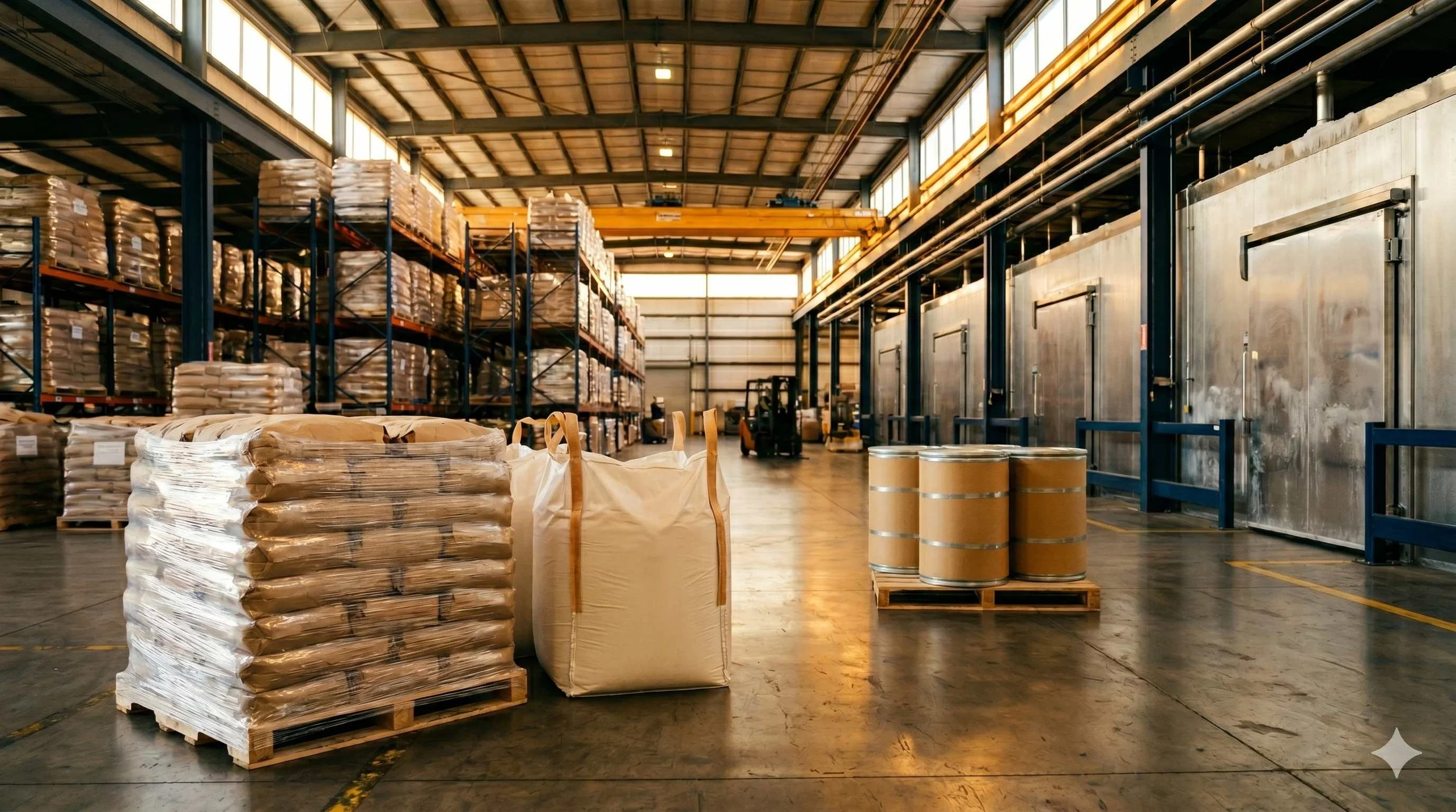
Sealed palletized bags and cases (25-kg, 50-lb, 55-lb formats)
Supersacks and bulk bags (1,000–2,205 lb)
Drums and IBC totes
Refrigerated and frozen totes (for butter, cheese, cultured products)
Refrigerated and frozen full truckloads
Dairy protein powders specifically: whey protein isolate (WPI), whey protein concentrate (WPC), milk protein isolate (MPI), milk protein concentrate (MPC), non-fat dry milk (NFDM, all heat classes), acid and rennet casein, sodium and calcium caseinate, and sweet cream powder. Typically 20 kg and 25 kg multiwall bags, 50 lb bags, supersacks, or fiber drums, palletized.
| Category | Examples | Typical Packaging & Storage |
|---|---|---|
| Whey & Whey Proteins | Sweet whey, acid whey, whey permeate, WPC 34/80, WPI 90, hydrolyzed whey | 25-kg bags, supersacks · Ambient |
| Milk Proteins | MPC 70/80/85, MPI, calcium caseinate, sodium caseinate, micellar casein | 25-kg bags, supersacks · Ambient |
| Milk Powders & Bases | NFDM (low/high heat), SMP, WMP, buttermilk powder, cream powder, lactose | 50-lb bags, supersacks · Ambient |
| Cultured & Fermented | Yogurt powder, kefir powder, cultured buttermilk, sour cream powder | Bags, drums · Ambient or refrigerated |
| Fats & Specialty | AMF, butter oil, bulk butter, butter powder, ghee, cheese powders, bulk cheese | Pails, cases, totes · Refrigerated or frozen |
| Functional & Specialty | Milk minerals, colostrum, lactoferrin, GOS, A2 milk powder, organic/grass-fed | Drums, fiber boxes · Ambient |
Expired, Off-Spec and Damaged Lots
Most of what we place in this category isn't clean surplus. It's a run of MPC that missed spec, a pallet of whey four months past its best-by with a clean retest, or a skid of ripped bags the warehouse won't put back on the rack. That material has buyers. It just has different ones.
Off-spec and expired dairy protein is a channel question more than a pricing question. A lot that misses a label claim by two points, a lot that's past date with documentation, and a lot whose bags were punctured on a repack line are three different materials with three different sets of buyers. Sorting that out is most of the work.
Conditions we take
Expired or past best-by, with lot documentation
Short-dated, where your customers won't accept the remaining shelf life
Off-spec on a measured attribute — protein content, moisture, solubility, ash, particle size, color, scorched particles
Failed QC against your internal spec, where the material is still within its own COA
Damaged packaging — ripped, punctured or torn outer bags, crushed or compromised pallets
Repack rejects and line overruns
Customer returns and refused shipments, where custody and storage are documented
Discontinued or reformulated inputs left after a spec change
What we don't take
Any lot with a pathogen positive. We don't place these into food or feed channels, and we'll say so directly rather than shop them around.
Lots with no COA, no lot number and no traceable origin
Powder exposed to water, sewage or chemical contamination
Material held under unknown storage conditions with no temperature or humidity history
Anything under an active recall or regulatory hold
That first line is the boundary. If a lot fails on safety rather than specification, it needs a disposal route, not a resale route.
What to send us for a distressed lot
Material and grade — e.g. "WPC 80", "MPC 85", "medium-heat NFDM"
COA and lot number, plus any retest results
Manufacture and best-by dates
What's wrong with it — the specific deviation, the date, or the packaging damage
Photos — the pallet, a full bag, the damaged bags, and a close-up of the label
Quantity — bag count, bag size, pallet count
Storage history
Pickup location, and whether it can be loaded by forklift
Lots with photos and a COA get reviewed fastest. Lots with neither usually can't be quoted at all.
How the Process Works
1. Send Us the Lot Details
Share what you're holding: material, volume, packaging, manufacture and best-by dates, COA/SDS if available, current location, and any photos. Quote requests are reviewed within one business day.
2. We Price the Options
Depending on the lot, we offer two paths:
Buy-out: We purchase the material outright. Fast, clean, no follow-up.
Brokerage: We place it with a qualified buyer in our network and you receive payment on settlement. Better unit economics on larger or higher-value lots.
We honor brand and territory restrictions and screen buyers accordingly — your material does not end up in channels you don't want it in.
3. Pickup and Disposition
We coordinate food-grade carriers (LTL, FTL, tanker) and handle the chain-of-custody documentation. You get a clear outcome report when the lot is closed.
Who We Work With
Dairy processors and ingredient manufacturers clearing surplus from production runs, format changes, or short-shelf-life dispositions
Beverage, nutrition, and supplement manufacturers holding excess protein powders from formulation changes or contract transitions
Bakeries, confectioners, and food manufacturers with surplus milk powders, butter, or cheese ingredients
Contract packagers with leftover material from completed runs
3PLs and cold storage facilities holding abandoned freight, distressed lots, or rejected shipments
Supplement and sports nutrition contract manufacturers with rejected, expired or over-ordered protein
Nutritional packers and private-label brands holding raw material after a formula or brand change
Co-packers and blenders with repack damage and line overruns
Warehouses and 3PLs holding abandoned or unclaimed pallets
We do not work with consumers, retail buyers, or single-pallet liquidators. Minimum economics typically start at full pallet quantities, with the strongest pricing on full truckload volumes.
Frequently Asked Questions
Q: Do you handle refrigerated and frozen dairy products? A: Yes. We coordinate refrigerated (35–40°F) and frozen (0°F or below) carriers for butter, cheese, cultured dairy, and fluid products. Temperature integrity is documented end-to-end and reported back to you with the disposition outcome.
Q: How much volume do I need to make this work? A: We can review pallet-level lots, especially for high-value items like WPI, MPC, or specialty proteins. The strongest economics typically start at full truckload quantities (40,000+ lbs). Smaller lots are often best aggregated with other surplus categories you may be holding.
Q: What's the difference between buy-out and brokerage? A: Buy-out means Waste Optima purchases the material outright and resells it — faster payment at a lower unit price. Brokerage means we place the material with a qualified buyer in our network and you receive payment on settlement — slower, but typically 15–30% better net to you on larger or higher-value lots.
Q: Will my brand show up on grey-market or retail channels? A: No. We honor brand and territory restrictions on every lot. Buyers are screened, and we can require re-labeling, brand removal, or ingredient-only resale on sensitive lots. We do not place surplus ingredient material into retail channels.
Q: Do you handle expired or short-dated dairy? A: It depends on the product and how far past date. Many dry dairy ingredients (NFDM, whey powders, lactose) retain functional integrity well past best-by dates if storage was correct. Cultured products and refrigerated dairy are more time-sensitive. Lots that can't move into human-food channels can often be placed in animal feed, pet food manufacturing, or controlled industrial channels.
Q: What documentation do I need to provide? A: A manufacturer Certificate of Analysis with allergen statement is required. SDS, lot/batch numbers, manufacture and best-by dates, and storage condition history (especially for refrigerated/frozen products) are also required. Photos of packaging condition speed up pricing significantly.
Q: How do you handle allergen requirements? A: Allergen statements are passed through to buyers on every brokered transaction. We don't move dairy material into facilities that aren't equipped to handle it. For lots with shared-equipment statements or specific cross-contact disclosures, those carry through to the final receiver.
Q: What about Grade A regulated products and PMO compliance? A: For Grade A products we work only with carriers and receivers qualified to maintain PMO-compliant handling. Tell us upfront if your material is Grade A — it materially changes the placement channels available.
Q: How fast can you move material? A: Quotes within one business day. Pickup typically within 5–10 business days of agreement for ambient products; cold chain pickups may take slightly longer depending on refrigerated/frozen carrier availability.
Q: Do you charge upfront fees? A: No. On buy-outs we pay you. On brokerage, our margin is built into the buyer-side pricing — no separate fees billed back to the seller.
Q: Do you buy expired or past-date dairy protein? A: Yes, when it can be documented. Expired whey, milk protein, casein and NFDM lots are reviewed on lot paperwork, storage history, and packaging condition. Placement depends on what a buyer can legally use the material for, so send the COA and photos before expecting a price.
Q: Who buys damaged or ripped bags of protein powder? A: Buyers who repack or reprocess. A torn outer bag with an intact inner liner is a different lot from one where the powder was exposed. Tell us which it is and send photos, because that distinction decides whether the material stays in a food channel or moves to feed.
Q: What happens to lots that fail a micro test? A: Lots with a pathogen positive are not candidates for this program. We don't place them into food or feed channels and we'll tell you that directly rather than shop them around.
Q: What if the lot is off-spec on protein content or moisture rather than safety? A: That's the most placeable category. Document the deviation and we disclose it to buyers. A lot that misses a label claim can still be a usable input for someone formulating to a different spec.
Q: Do you buy from supplement and nutritional packers as well as dairy plants? A: Yes. Contract manufacturers, private-label brands, blenders and 3PLs are a large share of what we place — rejected lots, over-ordered raw material, repack damage, and inventory stranded after a formula change.
Get a Quote
Include product name, lot/COA if available, best-by date, packaging type, quantity by pallet, photos, pickup ZIP, and any channel restrictions.
Explore More Food Ingredient Categories
Selling plant or specialty protein — pea, soy, rice, collagen, egg? See Surplus Plant & Specialty Proteins