
Buy Surplus & Off-Spec Maltodextrin
Source verified surplus, off-spec, and short-dated maltodextrin at 30-60% below distributor pricing. DE 10-20 grades, supersack and pallet quantities, manufacturer COA included.
Maltodextrin is one of the highest-turnover surplus ingredients in U.S. food manufacturing. Every month, contract packagers, beverage producers, nutritional formulators, and ingredient distributors generate surplus lots through DE drift, moisture absorption, packaging changes, SKU discontinuation, and overproduction. The material is functionally identical to prime grade for most non-retail applications — but it carries a 30 to 60 percent price advantage because it cannot move through traditional distributor channels. Waste Optima sources these lots directly from the original manufacturer and routes them to buyers who can use them.
Why Buyers Choose Surplus Maltodextrin
Cost Position. Surplus and off-spec maltodextrin typically trades at 30-60 percent below conventional distributor pricing. For high-volume applications where DE precision is not critical — animal feed, fermentation feedstock, industrial bulking — this is one of the largest input cost reductions available in the food and feed supply chain.
Functional Equivalence. A maltodextrin lot may be classified as off-spec for reasons that have no bearing on industrial or feed-grade use: a DE value 1-2 points outside the customer's contracted range, moisture content slightly above target, age beyond a brand's preferred shelf, or packaging that no longer matches a co-packer's line. The material itself remains a clean, identifiable carbohydrate with full traceability.
Documentation. Every lot Waste Optima sources includes the manufacturer Certificate of Analysis and lot identification. Surplus does not mean undocumented.
What Waste Optima Typically Sources
We source surplus and off-spec maltodextrin from food manufacturers, beverage producers, ingredient distributors, and contract packagers across the United States. Typical inventory characteristics:
DE Range: Most commonly DE 10 through DE 20 (low-to-mid DE). Higher DE lots (DE 25-40) appear less frequently.
Source Material: Corn-based. Non-GMO IP and conventional grades both move through the network.
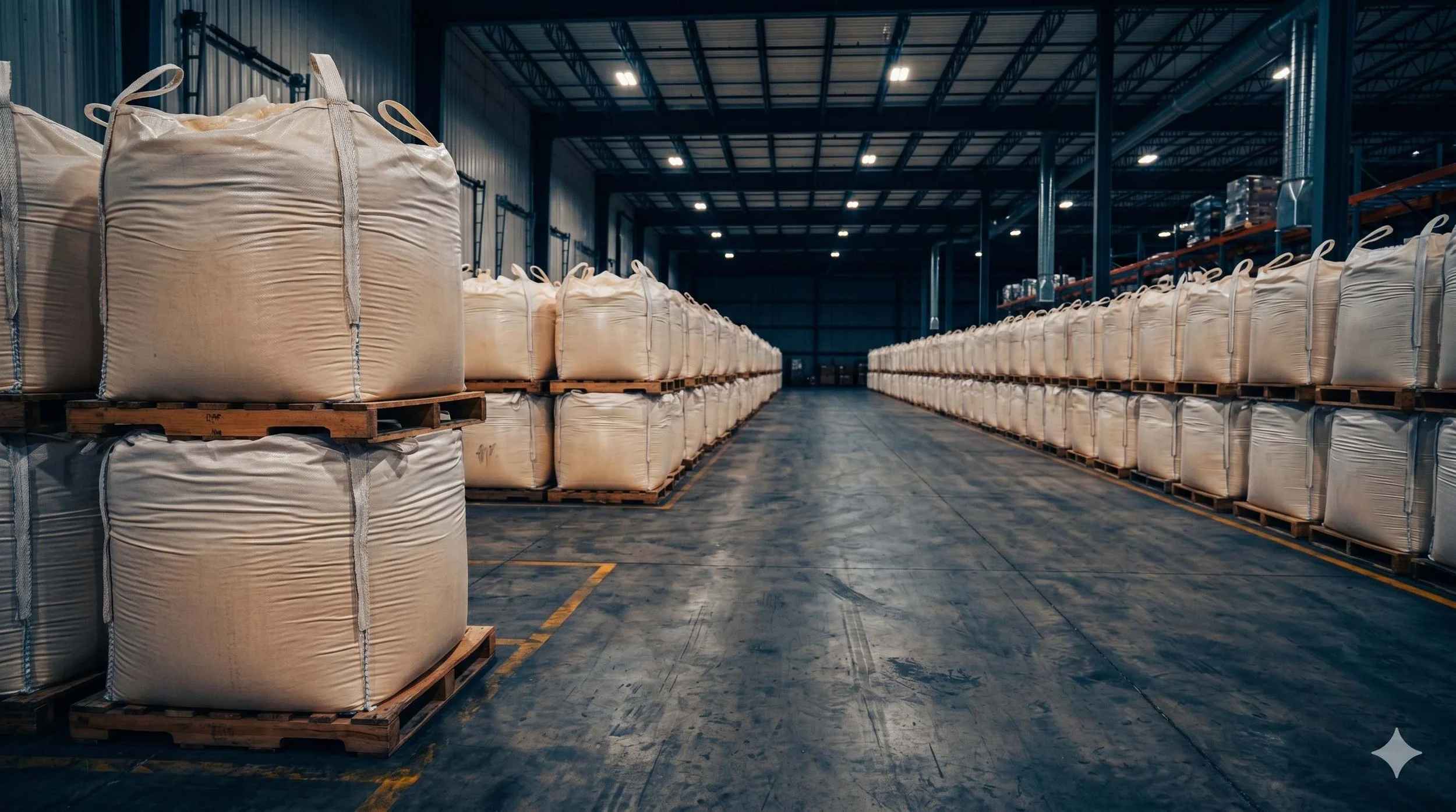
Packaging: 50 lb bags, 25 kg bags, 1,000-3,000 lb supersacks, and totes. Original manufacturer packaging in nearly all cases.
Lot Sizes: Typical lots range from 5,000 lbs (single pallet of bags) to full truckload quantities (40,000-44,000 lbs). Larger plant-closure liquidations occasionally exceed one truckload.
Condition: Sealed, original packaging. We disclose any physical condition concerns (clumping from moisture exposure, packaging integrity, age) before quoting.
Common Use Cases for Surplus Maltodextrin
Surplus maltodextrin moves into application channels where the price-to-function ratio matters more than retail spec precision:
Animal Feed Formulation. Maltodextrin serves as a high-energy carbohydrate carrier in swine, poultry, pet food, and aquaculture feed. Off-spec lots are routinely cleared by feed mills and pet food co-packers.
Fermentation Feedstock. Distillers, brewers, kombucha producers, and bioethanol operations use maltodextrin as a fermentable carbohydrate source. DE variance is generally not a disqualifier.
Industrial Bulking and Carrier Applications. Maltodextrin functions as a flow agent and bulking carrier in industrial flavor blends, dry detergent blends, and powdered consumer goods that are not retail-finished.
Bioethanol and Biofuel Inputs. Carbohydrate feedstock for second-generation ethanol producers and biogas digesters.
Adhesive and Coating Manufacturers. Maltodextrin appears in starch-based adhesive formulations and water-soluble industrial coatings.
Spray-Dry Carrier Markets. Lower-spec maltodextrin is used as a carrier in non-retail spray-dry applications where DE tolerance is wider.
If your application is not listed above, contact us — most industrial and feed-grade uses tolerate surplus material once specifications are verified against your formulation requirements.
Documentation and Verification
Every maltodextrin lot Waste Optima brokers includes:
Manufacturer Certificate of Analysis (COA)
Lot and batch identifier
DE value and moisture specification (actual, not nominal)
Source facility country of origin
Allergen statement where available
Packaging integrity disclosure (sealed, partial seal damage, etc.)
For buyers operating under FSMA, GMP, or feed-grade compliance frameworks, we provide the source documentation your incoming material verification process requires.
Frequently Asked Questions
Q: What does "off-spec" actually mean for maltodextrin? A: Off-spec typically refers to a lot that fell outside the original customer's specification window — most commonly DE value variance (e.g., a lot tested at DE 11 against a DE 10 contract), moisture above target, or a particle size distribution outside the buyer's range. The material itself is fully manufactured maltodextrin with a manufacturer COA. It is not contaminated, expired in the safety sense, or unsuitable for use — it simply cannot fulfill the original contract.
Q: Is surplus maltodextrin safe for animal feed? A: Yes, in the overwhelming majority of cases. Maltodextrin is a refined corn-derived carbohydrate and is generally recognized as safe (GRAS) for food and feed applications. We provide the manufacturer COA so your nutritionist or feed formulator can verify the lot against your formulation. We do not broker material with safety-related rejections (microbial, contamination, foreign material) into feed channels.
Q: Can off-spec maltodextrin be used in fermentation or ethanol production? A: Yes. Fermentation processes tolerate DE variance well — the fermentable sugar content is what matters, and DE-related variance is generally inside the acceptance window for distillers, brewers, kombucha producers, and bioethanol operations.
Q: What DE values does Waste Optima typically source? A: DE 10 through DE 20 is the most common range we see in surplus, with DE 10 (Maltrin M-100 equivalent) appearing most frequently. Higher DE lots (DE 25-40) appear less often. If you have a specific DE requirement, tell us in your intake — we will notify you when matching material is available.
Q: How much remaining shelf life is on surplus lots? A: It varies. Some lots are well within manufacturer best-by dates (overproduction or SKU discontinuation), others are short-dated or past best-by but still functionally usable. Maltodextrin is shelf-stable when sealed and stored dry. We disclose the manufacture date and best-by date on every lot before quoting.
Q: Do you provide Certificates of Analysis? A: Yes. Every lot ships with the manufacturer COA and lot identifier. We do not broker undocumented maltodextrin.
Q: What are typical minimum order quantities? A: We work in pallet and truckload quantities. The practical minimum is one pallet (typically 2,000-2,500 lbs of bagged maltodextrin, or one supersack at 1,000-3,000 lbs). Most lots clear in full truckload (40,000-44,000 lbs).
Q: How fast can you deliver? A: Domestic U.S. inventory typically ships within 3-7 business days of purchase order. We arrange LTL or full truckload logistics through food-grade carriers. International shipments require additional lead time for export documentation.
Q: Is this material food-grade or feed-grade? A: Both, depending on the lot. Material sourced from food manufacturers is food-grade by origin. Application classification (retail food, industrial, feed, fermentation) is a function of your incoming material verification and intended use. We provide the COA documentation; you classify against your facility's compliance framework.
Have Surplus Maltodextrin to Sell?
If you are holding off-spec, surplus, or short-dated maltodextrin and need to move it, we source on the seller side as well.