Industrial Composting Logistics: Managing Bulk Vegetable & Fiber Cake
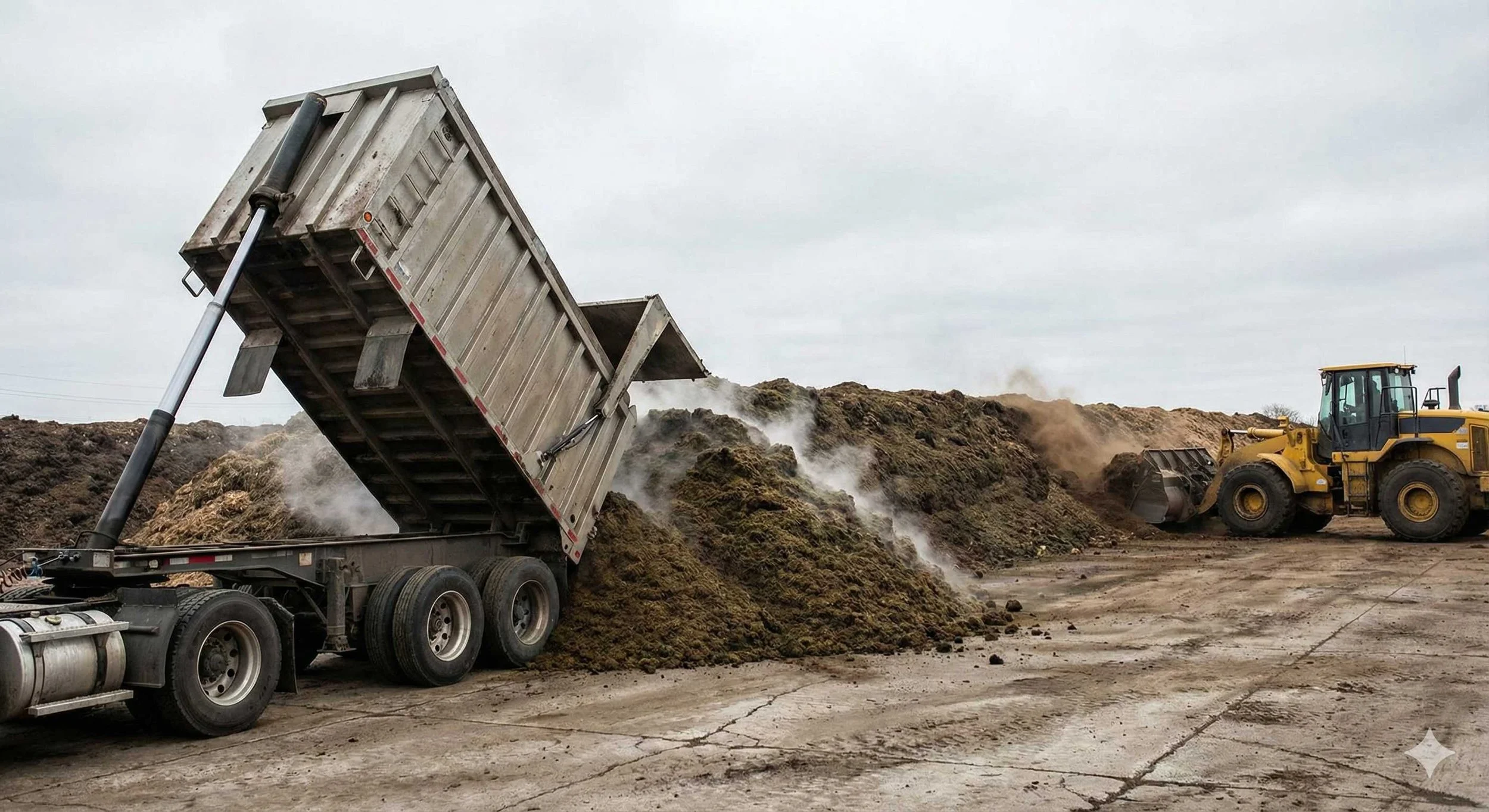
Not every organic waste stream is destined for the animal feed market. For vegetable processors, paper mills, and agricultural operations, the filter cake generated at the end of the line is often low in protein but incredibly high in volume and moisture.
Material like potato peels, corn husks, tomato wash sludge, or primary paper fiber is too wet to burn and too nutrient-poor for livestock. For years, the only option was the landfill—an expensive solution where you pay premium tipping fees primarily for water weight.
Waste Optima provides a sustainable, cost-effective alternative: Large-Scale Industrial Composting. We specialize in the heavy-haul logistics required to move dozens of truckloads of wet organic cake per week to certified composting facilities.
The Challenge: High Volume, Low Nutrient
Unlike soy or yeast cake, vegetable and fiber sludges lack the caloric density required for animal feed. They are primarily carbon, water, and fiber.
The challenge for producers isn't finding a "buyer"—it's managing the sheer logistics of disposal. These streams are heavy (often 70%+ moisture), odorous, and generated continuously. If a truck doesn't show up, production backs up.
We act as your logistics arm, ensuring reliable, scheduled removal of these heavy streams so your plant keeps running.
The Solution: The "Green" to Their "Brown"
Industrial composters operate on a balance of Carbon ("Browns" like wood chips and yard waste) and Nitrogen ("Greens" like food sludge and agriculture waste).
Your high-moisture vegetable or fiber cake is a desirable "Green" feedstock for large composting operations. They need your wet material to accelerate the breakdown of their dry material. Waste Optima leverages this symbiotic relationship to secure reliable, long-term off-take agreements that are often significantly cheaper than landfilling.
Compostable Industrial Streams
| Material Stream | Composition Role | Typical Consistency |
|---|---|---|
| Vegetable Wash Sludge | Nitrogen Source ("Green") | Very Wet / Mud-like |
| Paper Mill Fiber Cake | Carbon Source ("Brown") | Fibrous / Spadeable Solid |
| Agricultural Processing Waste | Nitrogen Source ("Green") | Variable / High Moisture |
Logistics for Heavy, Wet Loads
Moving 20 tons of semi-liquid sludge requires specialized equipment. Standard open-top dumpsters will leak, leading to roadway fines and environmental issues.
Waste Optima coordinates the right assets for the job:
Sealed Roll-Offs & sludge Containers: Gasketed doors prevent liquid egress during transport.
End Dump Trailers: For high-volume producers requiring full truckload movements of spadeable cake.
Just-in-Time Scheduling: We align pickup schedules with your generation rate to minimize on-site storage and odors.
Frequently Asked Questions
Can you take paper mill sludge?
Yes. Primary clarifier sludge from paper mills is excellent wood-fiber feedstock for composting. We ensure the material passes trace metal analyses before acceptance.
How wet is too wet for composting?
Composters need moisture, but they can't take pure liquid. Material generally needs to be "spadeable" (able to be piled) or pass a paint filter test. If your waste is pumpable liquid, anaerobic digestion may be a better fit.
Does this count towards zero-waste goals?
Absolutely. Diversion to industrial composting is classified as recycling/beneficial reuse by most reporting standards, moving tons directly off your landfill ledger.
Reliable Off-Take for High-Volume Organics
If your facility generates bulk volumes of vegetable or fiber cake, stop paying landfill prices for water. Contact Waste Optima to evaluate your stream for industrial composting solutions.